

You can train your glutes at home without weights, bands or a gym. Your glute muscles help you stand, climb stairs, walk and keep your hips and posture steady, so strengthening them is useful for everyday life as well as for fitness goals.
This beginner-friendly glutes workout uses just your body weight and takes about 20 minutes. Do it two to three times per week with a rest day in between. Below you will find a warm-up, seven moves with form tips, a weekly plan, ways to make it harder and common mistakes to avoid.
In this guide:
- Quick answer: what is the best glutes workout at home?
- Warm-up and the 7-move workout
- Form tips to feel your glutes working
- A weekly plan and how to progress
- Mistakes and FAQs
Quick Answer: What Is the Best Glutes Workout at Home?
- Glute bridges, sumo squats, donkey kicks, fire hydrants, reverse lunges, single-leg bridges and side-lying leg lifts.
- Do 2 to 3 rounds of 10 to 15 reps each.
- Train 2 to 3 days per week and rest in between.
- Move slowly and squeeze your glutes at the top of each rep.
Before You Begin
- Warm up for 3 to 5 minutes with marching, hip circles and bodyweight squats to a chair.
- Use a mat or a carpet. Keep water close.
- Check with a doctor if you have an injury, pain or a health condition, or are pregnant.
- Focus on form and slow control rather than speed.
- Know your glutes. You have three main glute muscles. Bridges, squats and kicks work them in different ways, which is why the workout mixes moves.
The 7-Move Glutes Workout
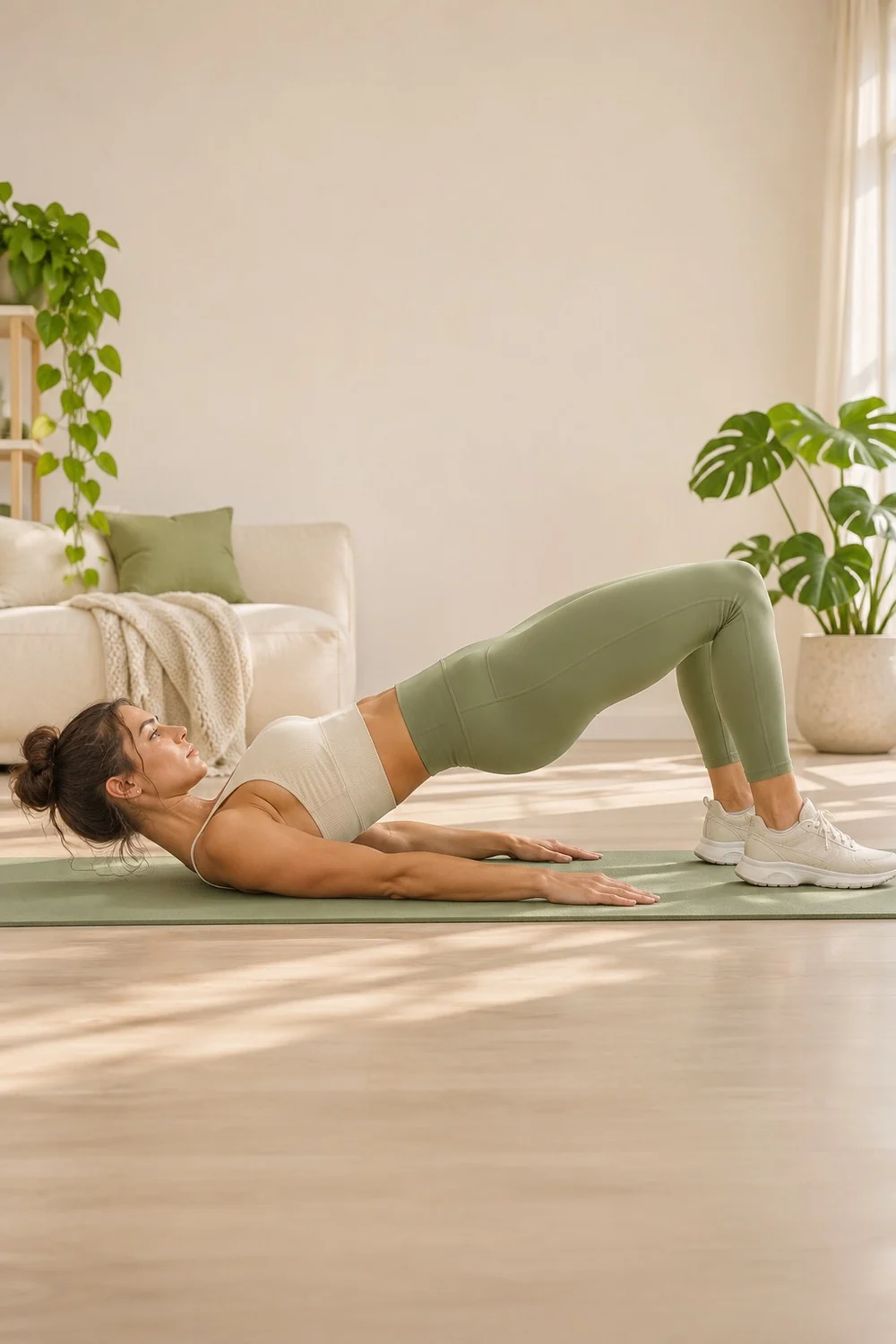
1. Glute Bridge
Lie on your back with knees bent and feet flat, hip-width apart. Press through your heels, lift your hips until your body makes a straight line from knees to shoulders, squeeze your glutes at the top for a second, then lower. Do 15 reps.
Form tip: keep your ribs down so you do not arch your lower back.
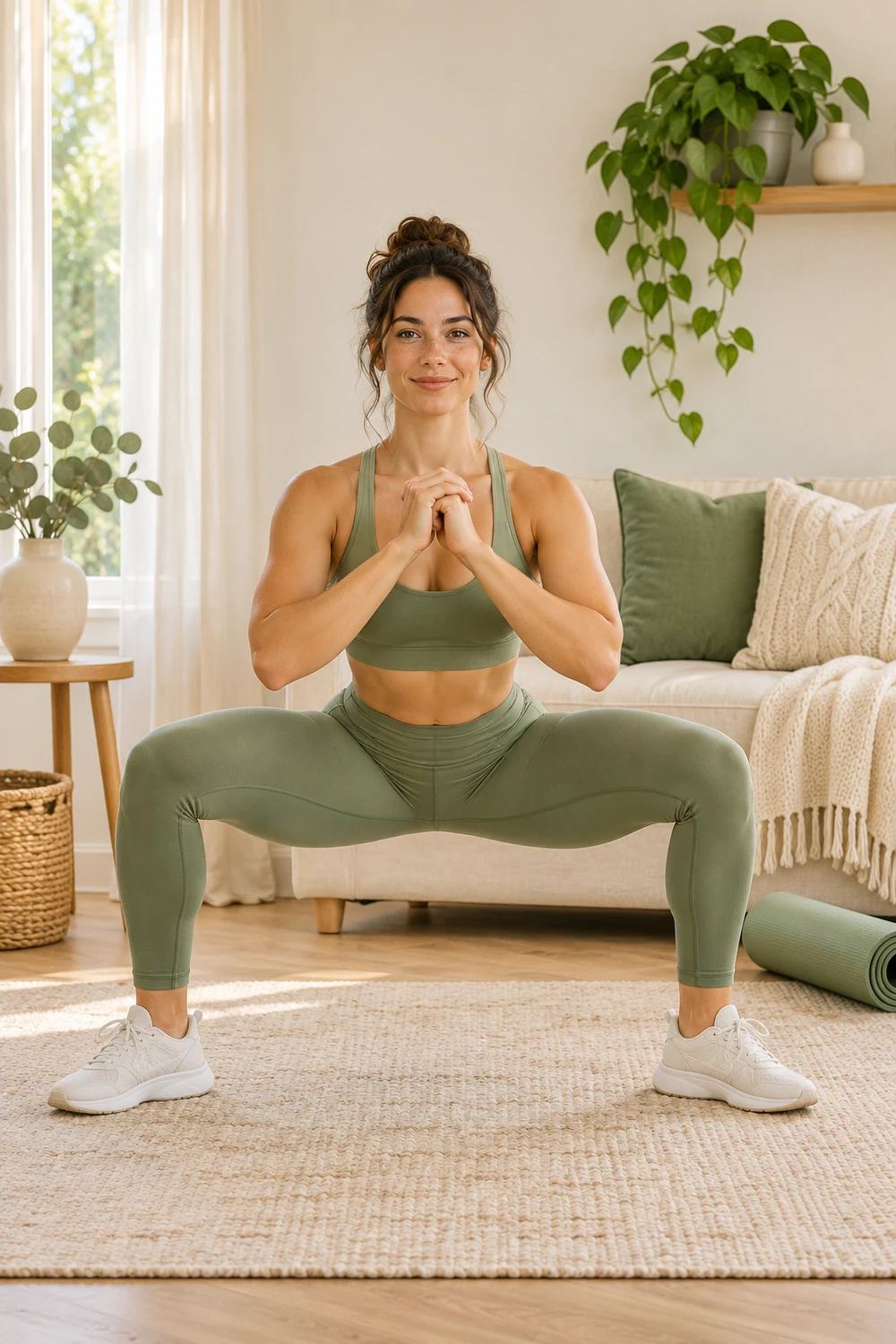
2. Sumo Squat
Stand with your feet wider than your shoulders and toes turned slightly out. Bend your knees, lower your hips, keep your chest up, then stand and squeeze your glutes. Do 12 to 15 reps.
Form tip: push your knees in the same direction as your toes.
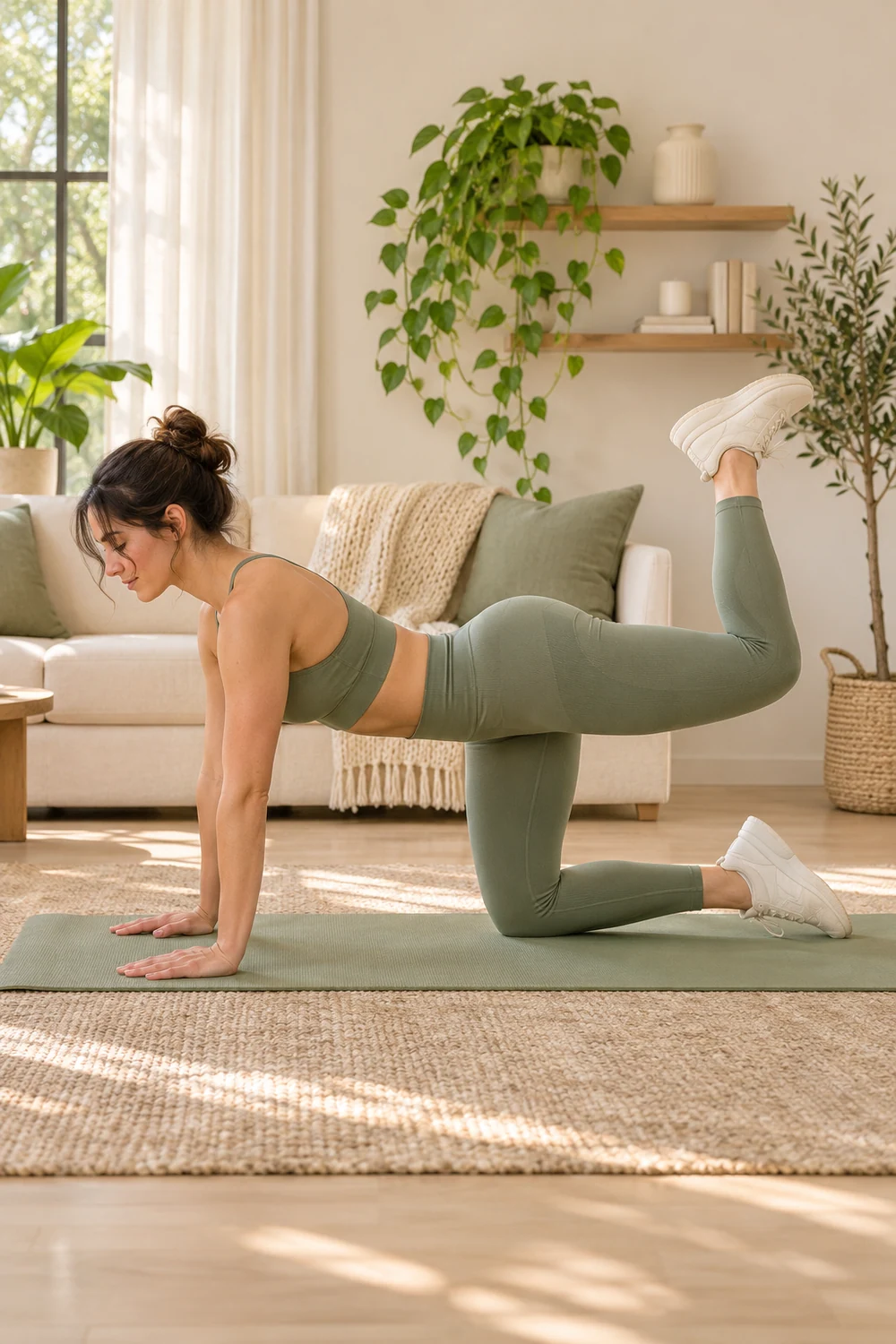
3. Donkey Kick
Start on hands and knees. Keep your knee bent and lift one foot toward the ceiling, keeping your hips square. Lower with control. Do 12 reps per side.
Form tip: think about pushing your heel to the ceiling, not swinging your leg.
4. Fire Hydrant
From hands and knees, lift one knee out to the side without twisting your torso, then lower. Do 12 reps per side.
Form tip: keep your hips facing the floor and your core gently tight.
5. Reverse Lunge
Step one foot back and lower until both knees bend comfortably, then push through the front heel to stand. Alternate legs. Hold a wall or chair for balance if needed. Do 10 reps per side.
Form tip: keep your front knee over your ankle and your chest tall.
6. Single-Leg Glute Bridge
Set up like a regular bridge, then extend one leg straight and lift your hips with the other. Keep your hips level. This is harder, so start with 6 to 8 reps. Do 8 reps per side.
Easier option: keep both feet down and add a three-second hold at the top.
7. Side-Lying Leg Lift
Lie on your side with legs stacked. Lift your top leg slightly behind your body’s midline and lower slowly. Do 15 reps per side.
Form tip: keep your toes pointing forward, not up, to focus on the side of your hip.
How to Do the Workout
- Go through all seven moves for one round.
- Rest for 60 seconds.
- Repeat for two rounds as a beginner and three rounds when it gets easier.
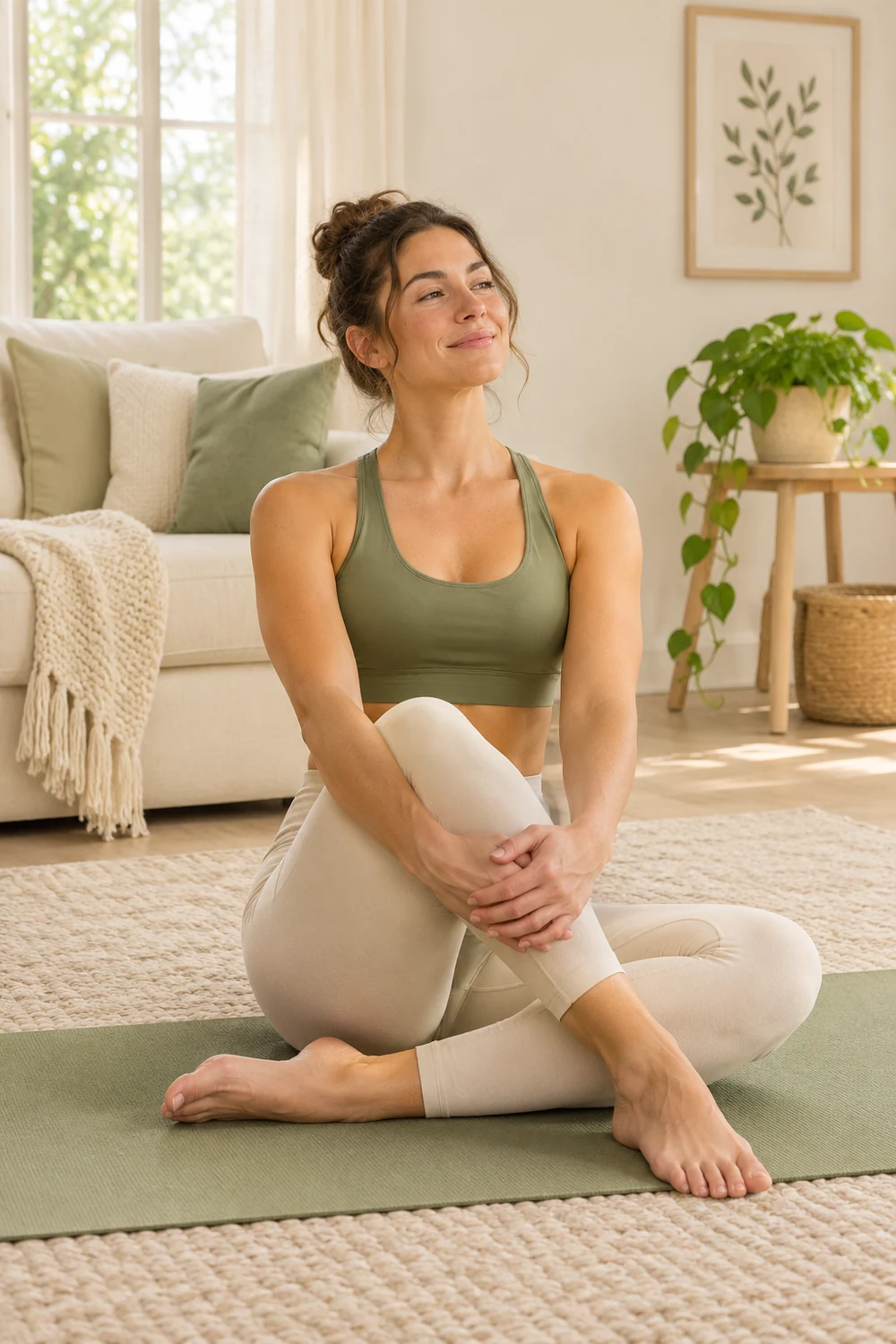
- Finish with a stretch such as a figure-four seated stretch and a child’s pose.
The whole routine takes about 20 minutes including the warm-up.
Tips to Feel Your Glutes Working
- Slow down. Take 2 seconds up and 3 seconds down.
- Squeeze at the top. A one-second pause helps you feel the right muscles.
- Press through your heels on bridges and squats.
- Avoid arching your lower back on kicks and bridges. Keep your abs gently engaged.
- Add a little challenge over time. More reps, more rounds, a slower tempo or a resistance band when you are ready.
- Warm up first. Cold muscles tend to feel “off” and make it harder to find the right muscles.
How Often Should You Train Glutes?
Two to three times per week works well for most beginners, with at least one rest day between sessions so muscles can recover. On other days, do light activity such as walking. Our 20-minute home workout for beginners can fill in the other days, and our Japanese walking guide adds easy cardio.
A Simple Weekly Plan
- Monday: Glutes workout
- Tuesday: Walk or stretch
- Wednesday: Full-body beginner workout
- Thursday: Rest
- Friday: Glutes workout
- Weekend: Long walk or yoga
How to Make It Harder Over Time
- Slow the tempo to 3 seconds up and 3 seconds down
- Add a mini resistance band above your knees for bridges and kicks
- Hold a backpack or a water jug during squats and lunges
- Add a third round
- Try the single-leg bridge as your main bridge
Change one thing at a time, and only when the current version feels easy for a couple of sessions.
Common Mistakes
- Going too fast. Speed makes it easy to use momentum instead of muscle.
- Letting knees cave in during squats and lunges. Keep them lined up over your toes.
- Doing it every day with no rest. Recovery is when you get stronger.
- Arching the lower back to lift higher. A smaller, controlled lift is better.
- Expecting instant results. Strength builds gradually, so be patient and consistent.
Frequently Asked Questions
Can I train my glutes at home without equipment?
Yes. Bodyweight moves like bridges, squats, lunges and kicks are effective for beginners, especially when done slowly with good form.
How many times a week should I do a glutes workout?
Two to three times per week with rest days in between is a good starting point.
How long until I notice a difference?
Many people feel stronger within a few weeks. Visible changes vary a lot between people and depend on many factors, so focus on how you feel and how your strength improves.
Why do I feel it more in my legs or back than my glutes?
Slow down, squeeze at the top and press through your heels. Try lighter variations first so you can feel the right muscles. If you feel your lower back more, shorten the range of motion.
Is it OK to do these every day?
Beginners usually do better with rest days between sessions. If you want to move every day, alternate glute sessions with walking or stretching.
Can I do this workout if I have knee or back pain?
Check with a healthcare professional first. Some moves can be adjusted, but pain is a signal to stop and get advice.
Final Thoughts
A strong, steady lower body helps with everything from walking to climbing stairs. Try this 20-minute routine twice this week and keep notes on how it feels. If you want a partner to join in, see our couple workouts at home for ideas to do together.
Related Articles You May Like
 Beginner Home Workouts20-Minute Home Workout for Beginners (No Equipment)Read article →
 Beginner Home WorkoutsStrength Training for Beginners: A Simple 3-Day PlanRead article →
 Beginner Home WorkoutsBest Home Workout Equipment for BeginnersRead article →
This article is for general information only and is not medical advice. Please consult a qualified healthcare professional before starting any exercise program, especially if you have a health condition, injury, back or knee pain, or are pregnant. Stop exercising and seek advice if you feel pain, dizziness or unusual symptoms.
This article is for general information only and is not medical advice. Talk to a doctor before changing your diet, exercise or health routine. Read our full disclaimer.