

Walking is one of the simplest ways to move, but sometimes it feels too easy to count. The Japanese walking method turns an ordinary walk into a structured workout by mixing slow and fast walking in short intervals. You do not need equipment, a gym or a special place. You just need comfortable shoes and about 30 minutes.
This guide explains what the Japanese walking method is, where it comes from, how to do it step by step, a four-week plan for beginners, tips to stay safe, and answers to common questions.
In this guide:
- Quick answer: what is the Japanese walking method?
- Where it comes from
- How to do it step by step
- A 4-week beginner plan
- Tips, mistakes and FAQs

Quick Answer: What Is the Japanese Walking Method?
- It is a form of interval walking: 3 minutes of slow walking followed by 3 minutes of fast walking.
- You repeat the cycle five times for a total of about 30 minutes.
- Fast means a brisk pace where you can talk but not sing. Slow means an easy, relaxed pace.
- Many people aim to do it a few times per week, building up gradually.
Where Does the Japanese Walking Method Come From?
Interval walking was studied by researchers at Shinshu University in Japan, who tested a walking routine that alternated between faster and slower pace in three-minute blocks. In the study, middle-aged and older adults who followed this style of walking for several months showed improvements in fitness and some health markers compared with people who walked at a steady pace.
The method became popular online as “Japanese walking” because of that research. It is important to remember that the results come from specific study groups, and results vary between people. Treat it as a pleasant, well-structured way to walk, not a guaranteed fix.
How to Do the Japanese Walking Method
What You Need
- Comfortable walking shoes
- A flat route, a park path or a treadmill
- A watch, timer or phone app
- A bottle of water
Step 1: Warm Up for 3 to 5 Minutes
Walk slowly and gently swing your arms. Roll your shoulders and take a few deep breaths. This gets your muscles ready.
Step 2: Walk Slowly for 3 Minutes
Walk at a relaxed, easy pace. You should feel comfortable and able to chat without effort.
Step 3: Walk Fast for 3 Minutes
Pick up the pace. Take quicker steps, swing your arms and stand tall. You should feel your heart rate rise and your breathing get deeper, but you should still be able to say a short sentence. If you cannot talk at all, slow down a little.

Step 4: Repeat Five Times
Alternate between slow and fast: slow 3 minutes, fast 3 minutes. Do this cycle five times, for 30 minutes in total.
Step 5: Cool Down for 3 to 5 Minutes
Finish with an easy walk and some gentle stretches for your calves, hamstrings and hips.
How Fast Is “Fast”?
Many people are unsure about pace. Here is a simple guide:
- Slow: relaxed pace, breathing easily, can talk in full sentences. This is a 3 out of 10 effort.
- Fast: brisk and purposeful, breathing harder but able to say a few words. This is a 6 or 7 out of 10 effort.
If you have a fitness tracker, you can use your heart rate, but the “talk test” works well without any device.
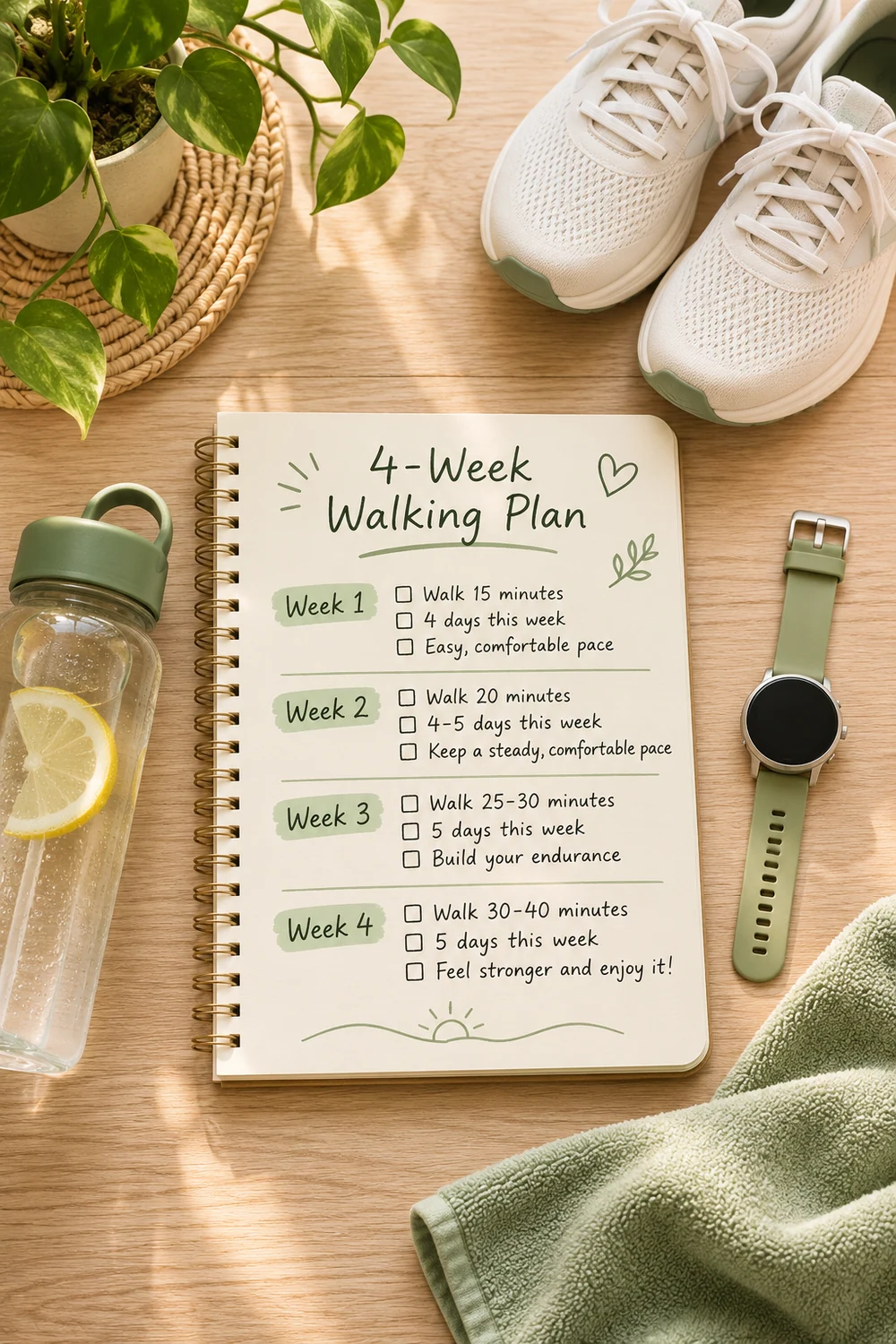
A 4-Week Beginner Plan
If you are new to exercise, start gently and build up. Ask your doctor first if you have any concerns.
- Week 1: Do 3 sessions. Use 2 minutes slow and 2 minutes fast, repeated 4 times (about 16 minutes).
- Week 2: Do 3 sessions. Use 3 minutes slow and 2 minutes fast, repeated 5 times.
- Week 3: Do 3 to 4 sessions. Use 3 minutes slow and 3 minutes fast, repeated 4 times.
- Week 4: Do 3 to 4 sessions. Use the full method: 3 minutes slow, 3 minutes fast, repeated 5 times.
Tips to Get the Most From It
- Stand tall. Keep your head up, shoulders relaxed and core lightly engaged.
- Swing your arms. Bend your elbows and let your arms move naturally.
- Take quicker steps rather than longer steps in the fast sections.
- Use a timer. Set repeating intervals on your phone or watch so you can enjoy the walk.
- Walk with a friend or partner. It makes it easier to stick with and you can use the talk test together. See our couple workouts at home for more ideas to do together.
- Try a treadmill or indoor route when the weather is bad.
- Wear supportive shoes. Comfort matters when you are building a habit.
How to Fit It Into Your Day
- Morning: Make it part of your healthy morning routine. A 30-minute walk in daylight is a nice start to the day.
- Lunch break: Do three or four cycles for a shorter session.
- After dinner: A walk can help you wind down. Keep the fast intervals gentle.
- Habit stack it. For example, “After I drink my coffee, I will put on my walking shoes.” Our guide to building good habits shows how.
Japanese Walking vs Regular Walking
- Structure: Japanese walking has a plan, with clear slow and fast periods. Regular walking is more casual.
- Variety: The intervals keep the walk interesting and make time pass faster.
- Effort: The fast intervals raise your effort for a short time, then let you recover.
Both are good. If you enjoy a relaxed stroll, keep doing it. The Japanese method is simply another option when you want a little more challenge.

Who Should Be Careful?
Talk to your doctor before trying interval walking if you:
- Have heart or blood pressure problems
- Have joint, back or foot pain
- Are pregnant
- Have been inactive for a long time or are recovering from illness or injury
Always stop and get advice if you feel chest pain, dizziness or unusual breathlessness.
Common Mistakes
- Starting too fast. Begin with shorter intervals and build up.
- Walking too fast in the slow sections. The slow intervals are for recovery.
- Wearing unsupportive shoes. Poor shoes can make walks uncomfortable.
- Skipping the warm-up and cool-down. Both help your body adjust.
- Doing it every day from the start. Three days a week is a good beginning. Add strength moves, such as those in our glutes workout at home, on other days.
Frequently Asked Questions
How often should I do the Japanese walking method?
Many people aim for three to four times a week, building up gradually. Add easy walking or stretching on other days.
How long does a session take?
The full method takes about 30 minutes, plus a short warm-up and cool-down.
Do I need to walk fast the whole time?
No. The slow intervals matter just as much as the fast ones. They give your body time to recover so you can keep the fast intervals up.
Can beginners do it?
Yes. Start with shorter intervals like 2 minutes slow and 2 minutes fast, and build up over a few weeks.
Can I do it on a treadmill?
Yes. Use the speed settings for slow and fast, and keep the incline low at first.
Will it help me lose weight?
Walking supports overall health, but weight changes depend on many factors like food, sleep and your own body. Focus on building a regular habit and feeling good rather than chasing numbers.

Final Thoughts
The Japanese walking method is a simple, low-impact way to make your walks more structured and a little more energizing. Start with the beginner plan, use the talk test to find your pace and be patient as your fitness builds. If you want more movement ideas, try our 20-minute home workout for beginners on your non-walking days.
Related Articles You May Like
- Walking Yoga: What It Is and a 10-Minute Routine
- Beginner Pilates at Home: 10 Moves for Your First Week
- How to Start a Daily Walking Habit: A 30-Day Plan
This article is for general information only and is not medical advice. Please consult a qualified healthcare professional before starting a new exercise routine, especially if you have a heart condition, high blood pressure, joint problems, or have been inactive for a long time. Stop and seek advice if you feel chest pain, dizziness or unusual shortness of breath.
This article is for general information only and is not medical advice. Talk to a doctor before changing your diet, exercise or health routine. Read our full disclaimer.