

Good sleep does not just come from a comfortable bed. It also comes from the habits and surroundings that surround it. Sleep hygiene is the name for those habits: how you spend your evenings, how you set up your bedroom and what you do during the day. The good news is that small changes often make a noticeable difference.
This sleep hygiene checklist gives you 12 simple habits you can start tonight, split into daytime, evening and bedroom groups. You will also find a one-week plan, common mistakes and answers to frequent questions.
In this guide:
- Quick answer: what is sleep hygiene?
- The 12-habit checklist
- A one-week plan
- Mistakes and FAQs

Quick Answer: What Is Sleep Hygiene?
- Sleep hygiene means the daily habits and bedroom settings that support good sleep.
- The basics are a steady schedule, a dark, cool and quiet bedroom, limiting caffeine and screens late in the day and a calming wind-down.
- Most adults need at least seven hours of sleep per night, according to the CDC.
- Pick three or four habits from the checklist and build from there.
The Sleep Hygiene Checklist
Daytime Habits
1. Keep a Steady Sleep Schedule
Go to bed and wake up at about the same time every day, including weekends. A steady rhythm helps your body know when to feel sleepy. If you want to shift your schedule, move it by 15 minutes at a time.
2. Get Daylight and Move Your Body
Daylight in the morning and regular movement during the day can support better sleep at night. A short walk outside is a simple way to do both. See our healthy morning routine ideas for easy ways to start the day.
3. Watch Your Caffeine
Caffeine can stay in your body for hours. Try to have your last coffee, strong tea or energy drink at least six hours before bed, or earlier if you are sensitive. Notice how it affects you and adjust.
4. Keep Naps Short
A short nap of 20 to 30 minutes earlier in the day can refresh you without disturbing night sleep. Long or late naps can make it harder to fall asleep.

Evening Habits
5. Eat and Drink Mindfully in the Evening
Heavy meals, spicy food and large amounts of liquid close to bedtime can make it harder to settle. Try to finish dinner two to three hours before bed. Our healthy dinner ideas for busy weeknights include lighter, easy options.
6. Be Careful With Alcohol
Alcohol may make you feel sleepy at first, but it can disturb the quality of your sleep later in the night. If you drink, do so in moderation and not right before bed.
7. Put Screens Away Before Bed
The light and the content of phones, tablets and TVs can keep your mind alert. Try to stop using screens 30 to 60 minutes before bed. If that feels hard, our 7-day digital detox plan shows you how to build up slowly.
8. Build a Calming Wind-Down
Spend the last 30 to 60 minutes before bed doing calm activities, like a warm shower, light stretching, reading or a few minutes of slow breathing. Our night time routine guide has 10 steps to choose from.

Bedroom Habits
9. Keep It Dark
Light can interfere with sleep. Use blackout curtains or an eye mask, and cover small standby lights on electronics. If you need to get up at night, use a dim night light instead of bright overhead lights.
10. Keep It Cool and Quiet
Many people sleep better in a slightly cool room. A common suggestion is around 65°F (18°C), but choose what feels comfortable for you. If noise is a problem, try earplugs or a fan or white noise machine.
11. Make the Bed Comfortable
A supportive mattress and pillow, clean sheets and breathable bedding all help. You do not have to buy new things right away. Start by washing your sheets, fluffing your pillows and removing clutter from around the bed.
12. Use the Bed Mainly for Sleep
Try not to work, scroll or watch TV in bed. When your brain links the bed with sleep, it is easier to drift off. If you cannot sleep after a long time, get up and do something calm in dim light until you feel sleepy.
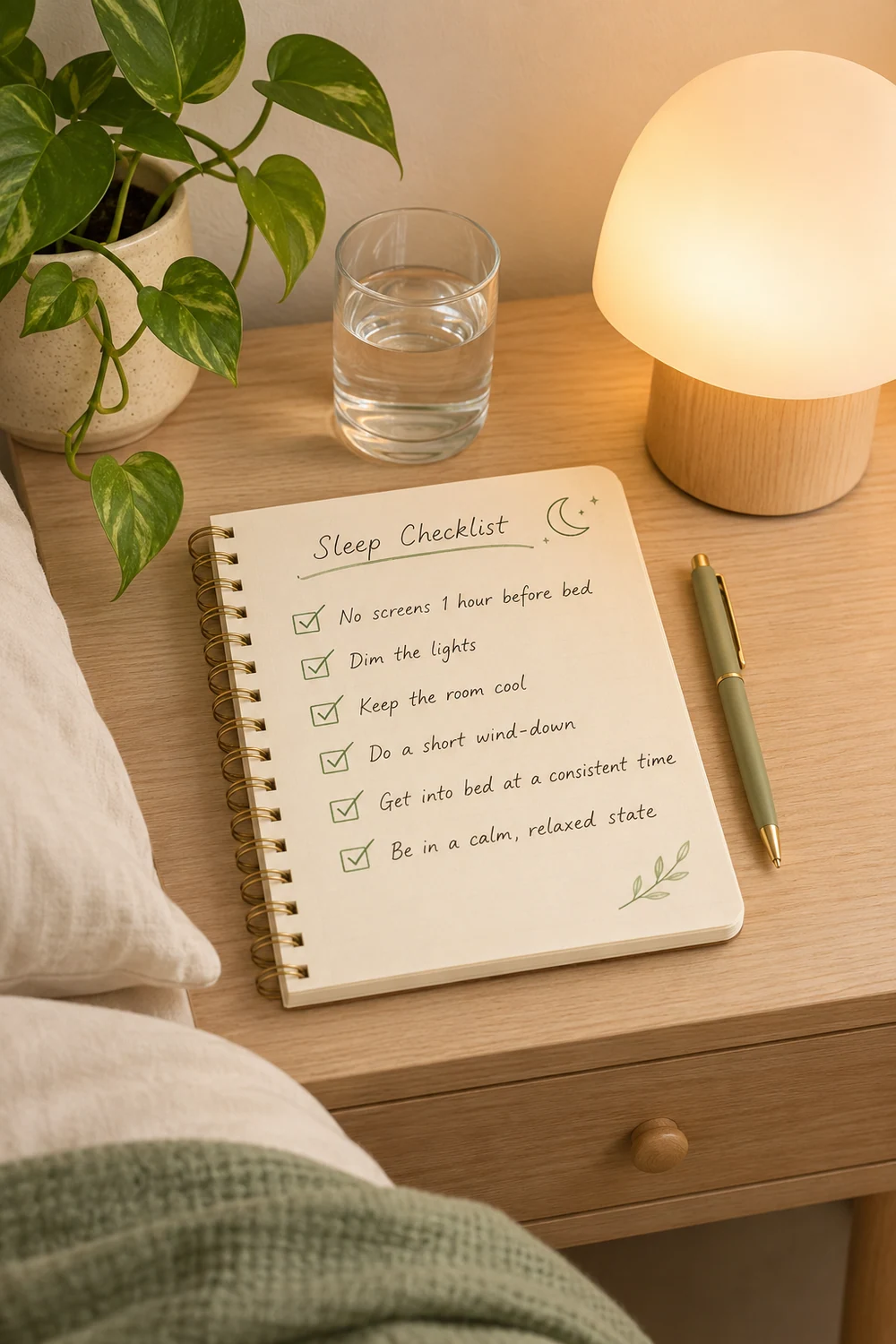
Your Printable Sleep Hygiene Checklist
Copy this list into your notes or a notebook and tick off what you do each day.
- ☐ Same bedtime and wake time
- ☐ Daylight and movement today
- ☐ No caffeine after midday or six hours before bed
- ☐ Nap kept short or skipped
- ☐ Light dinner, finished a few hours before bed
- ☐ Screens off 30 to 60 minutes before bed
- ☐ Wind-down routine done
- ☐ Bedroom dark, cool and quiet
- ☐ Phone charging away from the bed
- ☐ Bed used mostly for sleep
A One-Week Plan to Start
- Day 1: Choose a bedtime and wake time you can keep and set a reminder to start winding down.
- Day 2: Make your bedroom darker and tidier.
- Day 3: Set a caffeine cut-off time.
- Day 4: Put your phone on the charger across the room.
- Day 5: Add a 15-minute wind-down.
- Day 6: Get some daylight and a short walk.
- Day 7: Review. What helped? Keep those habits and try one new one next week.
If you want to turn these into a lasting routine, our guide on how to build good habits explains how to stack them onto things you already do.
Common Mistakes
- Changing everything at once. Start with three or four habits.
- Sleeping in too much at weekends. It can throw off your body clock.
- Using your phone in bed “just for a minute.” It often turns into much longer.
- Lying in bed frustrated. Get up for a little while and return when sleepy.
- Ignoring ongoing problems. If sleep stays poor, ask a doctor.
Frequently Asked Questions
What is sleep hygiene?
Sleep hygiene is the set of habits and bedroom conditions that help you fall asleep and stay asleep, such as a steady schedule, limited caffeine and a calm, dark room.
How many hours of sleep do I need?
Health organizations such as the CDC suggest that most adults need at least seven hours a night. Your own needs may vary.
How long does it take for sleep hygiene changes to work?
It varies. Some people notice changes within a week or two, while others take longer. Be patient and keep your changes steady.
Does exercise help sleep?
Regular physical activity can support better sleep. Many people prefer to avoid very hard workouts close to bedtime. Choose what suits you.
Should I use sleeping pills or supplements?
Talk to a doctor or pharmacist before using any sleep aid or supplement. This article is not a substitute for medical advice.
When should I see a doctor about sleep?
If you have trouble sleeping for several weeks, feel very sleepy in the day, snore loudly or have pauses in breathing, please see a doctor.

Final Thoughts
You do not need a perfect bedroom or a long routine to improve your sleep. Choose three or four habits from this checklist, repeat them for a week and see how you feel. Small, steady changes are the ones that last. When you are ready, read our night time routine for better sleep and our healthy morning routine to link your evenings and mornings together.
Related Articles You May Like
- Night Time Routine for Better Sleep: 10 Calming Steps
- Best Cozy Blankets and Throws for Winter Evenings
- How to Do a Digital Detox: A Simple 7-Day Plan
This article is for general information only and is not medical advice. Ongoing sleep problems can have many causes. If you regularly struggle to sleep, feel very tired in the daytime, snore loudly or stop breathing at night, please speak with a doctor.
This article is for general information only and is not medical advice. Talk to a doctor before changing your diet, exercise or health routine. Read our full disclaimer.