

A habit tracker is one of the simplest tools for building a new routine. It shows your progress at a glance, helps you notice patterns and gives you a small hit of satisfaction every time you tick a box. You do not need an expensive planner or beautiful handwriting. A pen, a page and a clear plan are enough.
Here are habit tracker ideas and layouts you can copy for a 30-day challenge, with tips on choosing habits and keeping at it.
In this guide:
- Quick answer: what makes a good habit tracker?
- 10 habit tracker layouts
- How to choose what to track
- A 30-day plan, mistakes and FAQs
Quick Answer: What Makes a Good Habit Tracker?
- It is simple, visible and quick to fill in.
- It tracks one to five habits, not twenty.
- You check it at the same time each day.
- It focuses on progress, not perfection.
10 Habit Tracker Layouts to Try
1. The Classic Grid
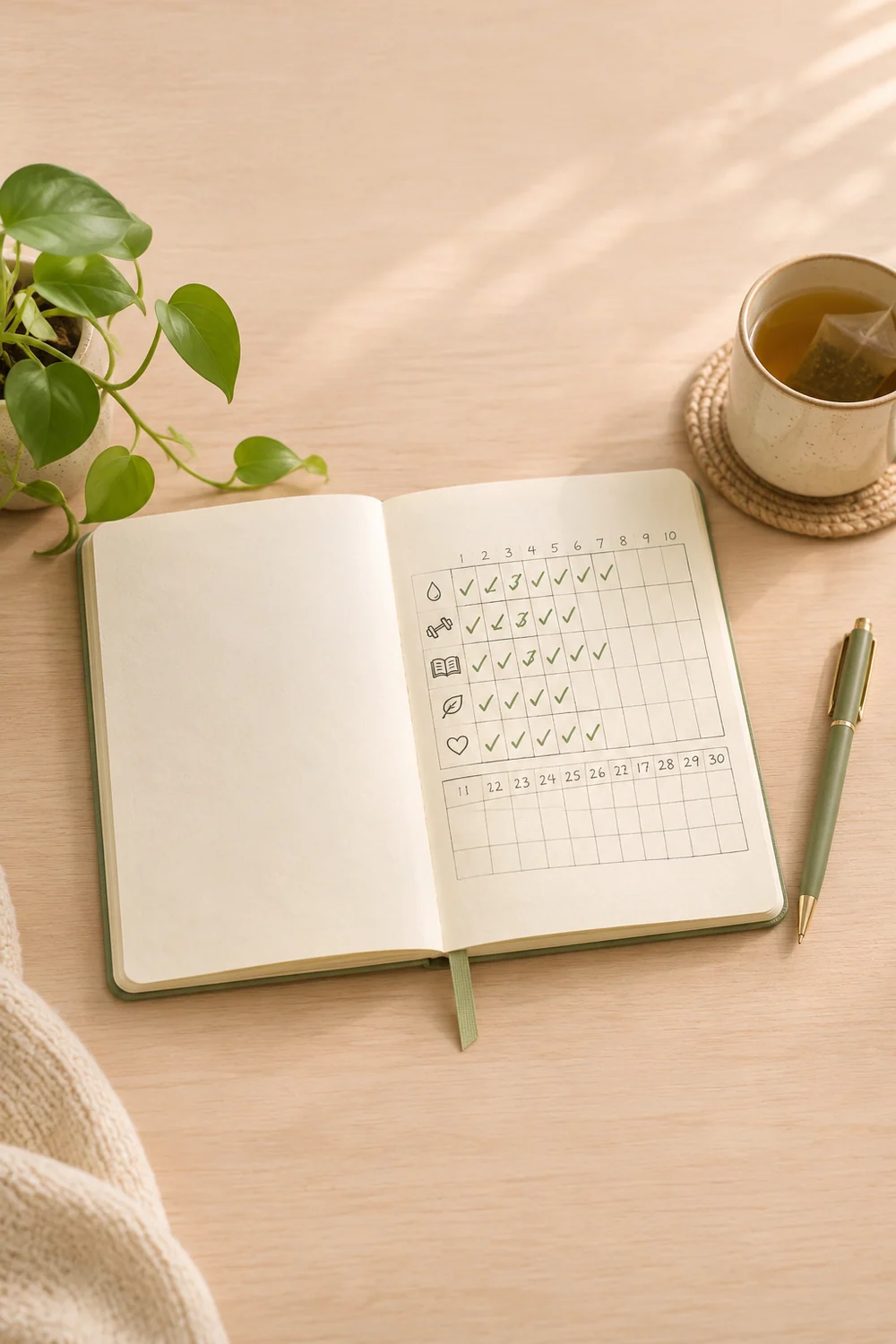
Draw a grid with habits down the side and days of the month across the top. Fill a box each day you do the habit. It is the easiest layout to make and read.
2. The Circle Tracker
Draw 30 small circles in a row or a ring. Color one in per day. It is simple and satisfying to see the circle fill.
3. The Streak Calendar
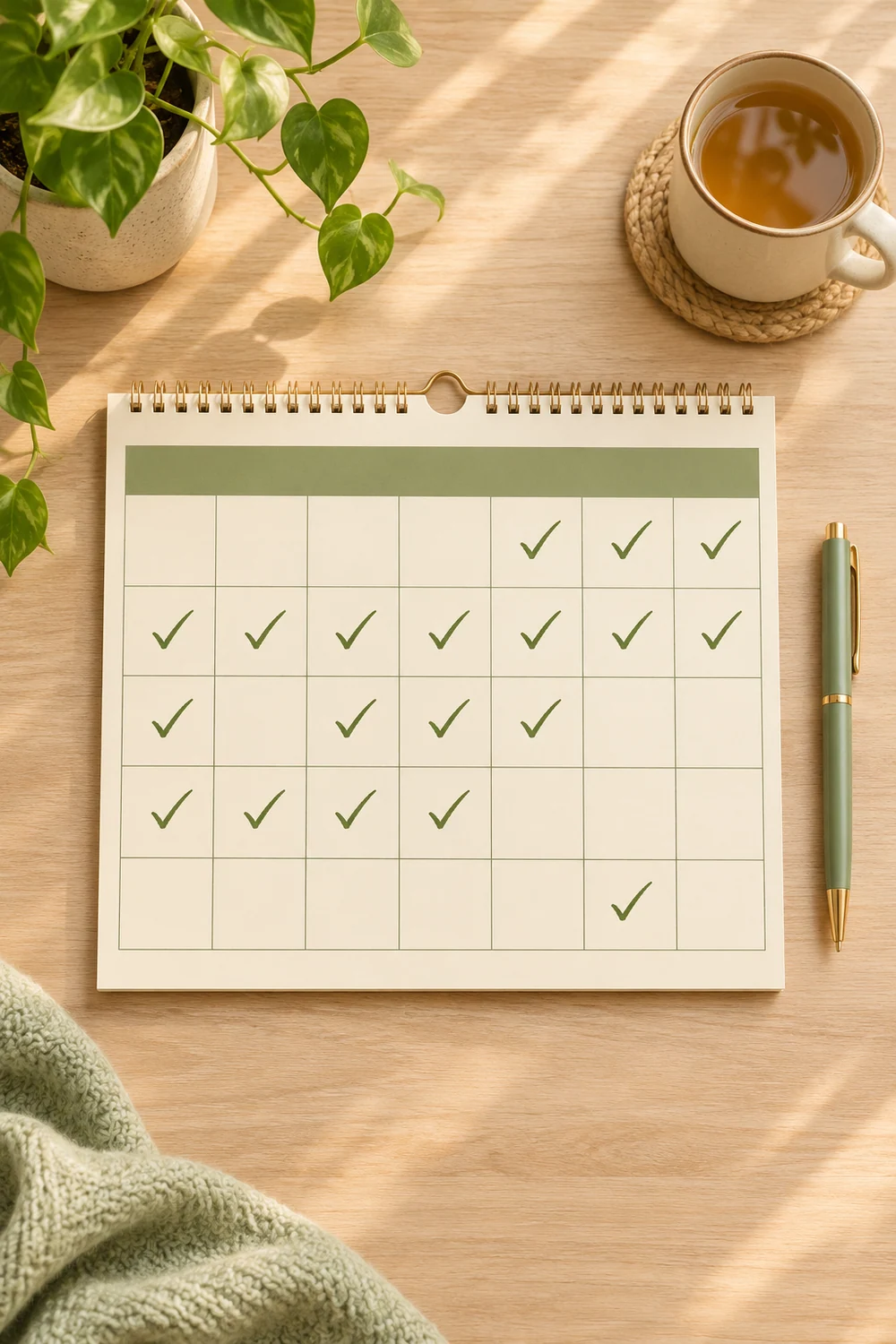
Use a monthly calendar and put a tick or a sticker on each day you do your habit. Aim for a visible chain.
4. The Single-Habit Page
Dedicate a page to one big habit, like walking. Add a small space for notes, such as how it felt.
5. The Mood and Habit Tracker
Add a row for mood (one to five or a color) to see how habits and mood relate. Do not draw big conclusions, just notice patterns.
6. The Weekly Habit Row
Place a row of seven small boxes in your weekly planner under each habit. Great for people who plan weekly. See our simple daily planner setup for how to combine them.
7. The Progress Bar
Draw a long bar divided into 30 segments and shade one each day. It feels like leveling up.
8. The Coloring Tracker
Make a drawing, such as a mandala or a tree, divided into 30 parts. Color a part each time you do your habit.
9. The Sticker Tracker
A page of 30 squares and a pack of stickers. Fun, especially if you are doing it with kids.
10. The Digital Tracker
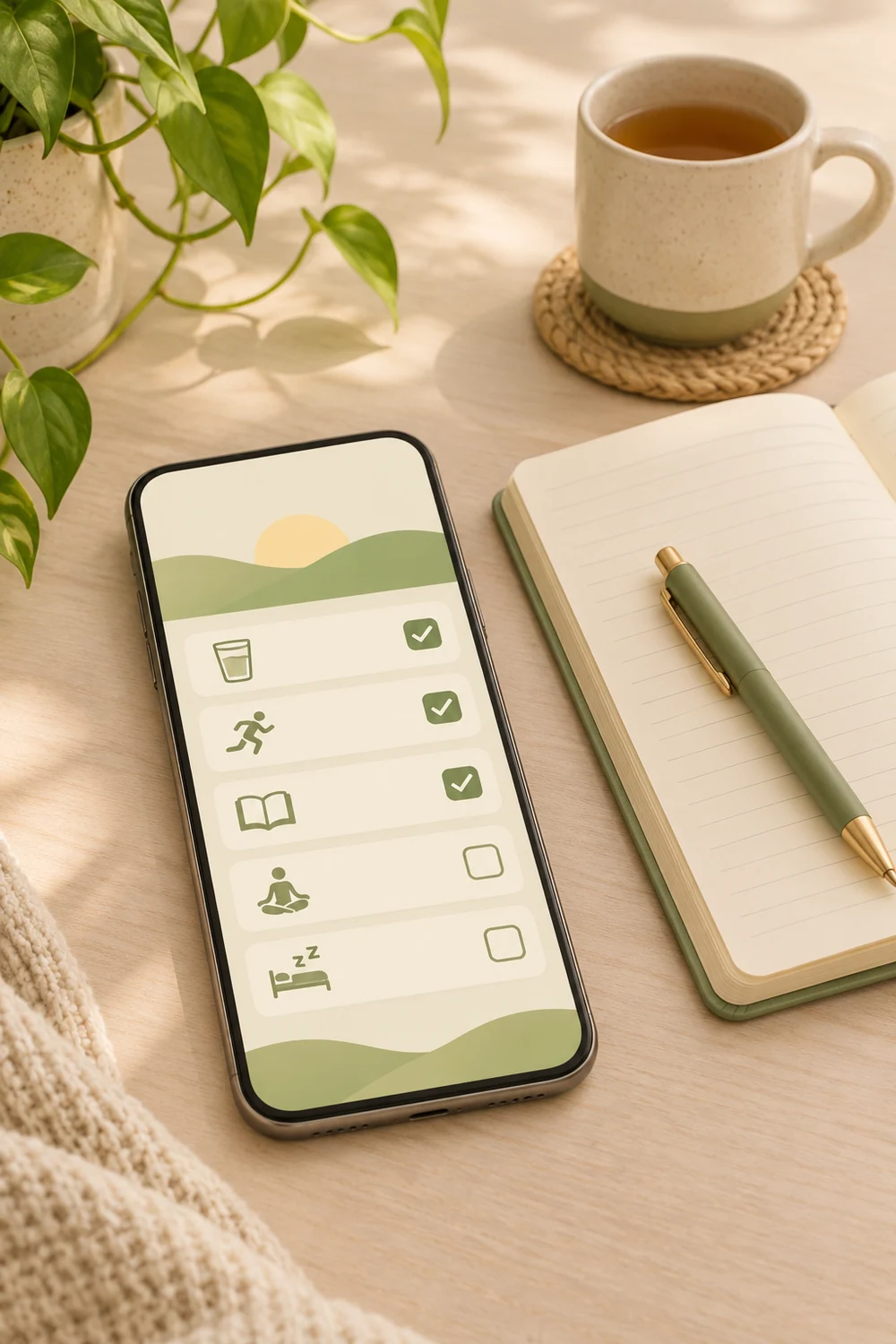
Use a habit app or a spreadsheet with checkboxes. Great for reminders and for people who prefer screens.
How to Choose What to Track
- Start with one to three habits. Too many make the tracker feel like homework.
- Make each habit specific. “Walk for ten minutes” is better than “exercise.”
- Mix easy and slightly challenging habits. Easy ones build momentum.
- Include a rest or flexible row. A “free” box for days off removes pressure.
Need ideas? See our list of 21 healthy habits to add to your day, or try a challenge such as the 7-day home workout challenge or the daily walking habit 30-day plan.
A Simple 30-Day Plan
- Days 1 to 7: Track one habit only. Just tick it.
- Days 8 to 14: Add a second habit and a small reward.
- Days 15 to 21: Look for patterns. What time works best? What gets in the way?
- Days 22 to 30: Adjust the habits if needed, then reflect and plan the next month.
Our guide on how to build good habits explains how to make habits tiny and stack them onto routines.

Tips to Keep Tracking
- Keep it where you will see it. Next to your toothbrush, on the fridge or on your desk.
- Fill it in at the same time each day. After brushing your teeth or before bed works well.
- Do not break the chain twice. Missing one day is normal.
- Celebrate milestones. A small reward at day 7, 14 and 30.
- Keep it simple. If it takes more than a minute, simplify it.
- Review at the end. Note what worked.
Common Mistakes
- Tracking too many habits. Start small.
- Making it too decorative. If you spend an hour drawing, you may skip the habit.
- Judging yourself for blanks. Blanks are information, not failure.
- Never reviewing. A quick review helps you adjust.
- Tracking vague habits. Be specific.
Frequently Asked Questions
How many habits should I track?
One to five, with one to three being ideal for beginners.
Should I use paper or an app?
Choose the one you will actually use. Paper is visual and simple, while apps offer reminders.
What if I miss a day?
Keep the blank, and continue the next day. Try not to miss two days in a row.
How long should I track a habit?
Many people use a 30-day trial, then decide whether to continue or adjust. Habits can take longer to feel automatic.
What are some good habits to track?
Water, walking, stretching, sleep time, reading, journaling and screen-free time are all popular.
Can I track habits with a partner?
Yes. A shared tracker on the fridge can add accountability and fun.
Final Thoughts
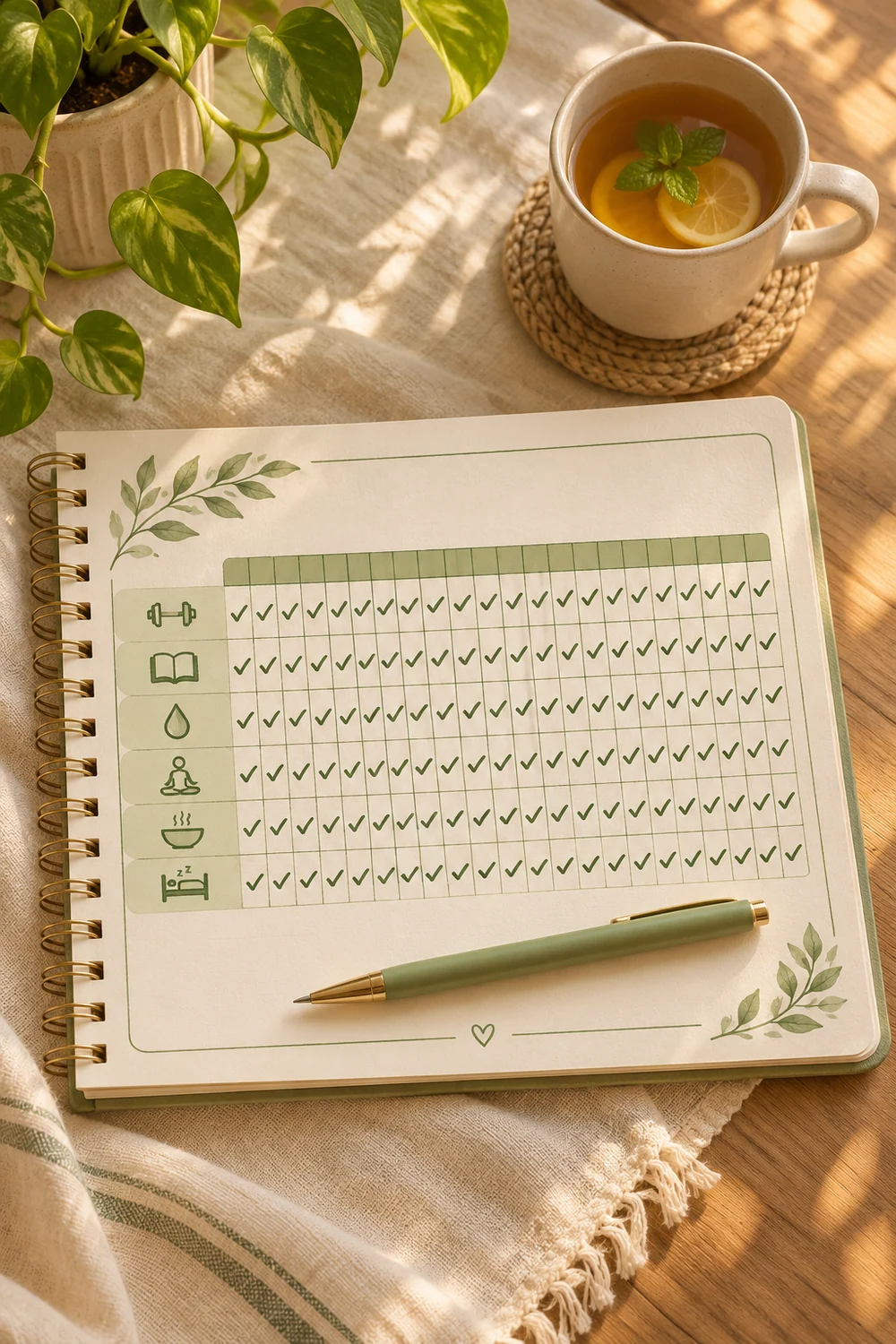
A habit tracker works because it makes progress visible. Choose one layout from this list, pick one to three habits and start today. When you see a row of ticks, you will feel the momentum build.
Related Articles You May Like
- 21 Healthy Habits to Add to Your Day (Pick Just 3)
- Simple Daily Planner Setup for Beginners
- Daily Habits of Healthy Women: What a Normal Day Looks Like
This article is for general information and inspiration only and is not medical advice. If you have a health condition or concerns about exercise, sleep or nutrition, please speak with a qualified healthcare professional.
This article is for general information only and is not medical advice. Talk to a doctor before changing your diet, exercise or health routine. Read our full disclaimer.