
Buying a planner is easy. Actually using it is harder. Many people start a planner with big plans, fill it for a week and then abandon it because it feels like too much work. The truth is that a good planner does not need color coding, stickers or an hour of setup. A simple daily planner setup takes five to ten minutes a day and helps you feel clearer and calmer.
This beginner guide shows you what to include, how to set up a page, a sample day and tips to make the habit stick.
In this guide:
- Quick answer: what is a simple daily planner setup?
- What you need
- A step-by-step daily page
- Weekly and monthly layers
- Mistakes and FAQs
Quick Answer: What Is a Simple Daily Planner Setup?
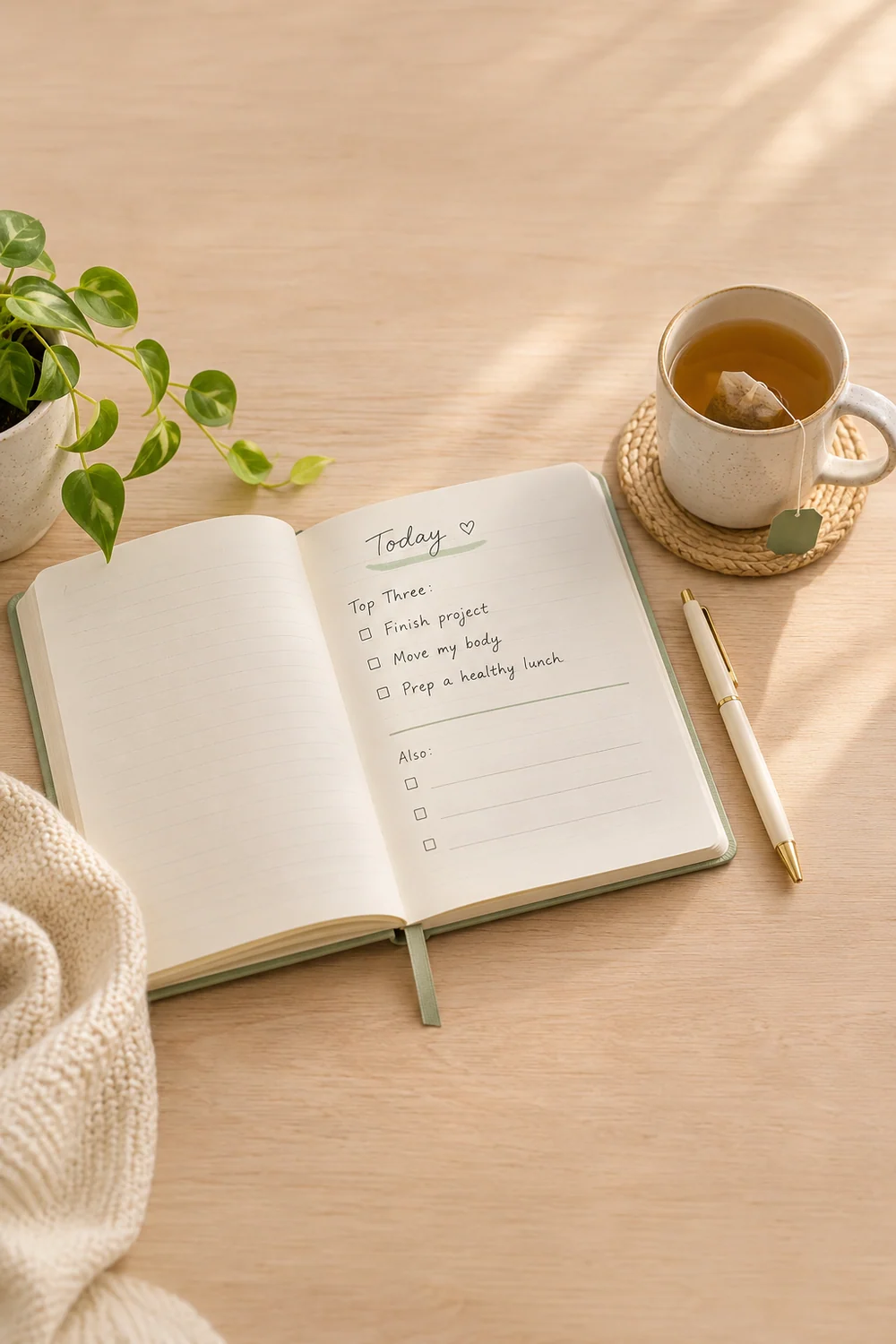
- One page per day with three parts: top 3 priorities, a simple schedule and a notes or gratitude line.
- Plus a weekly page to see the big picture.
- It takes 5 to 10 minutes each morning or the night before.
- Use paper or an app. The best planner is the one you will open.
What You Need
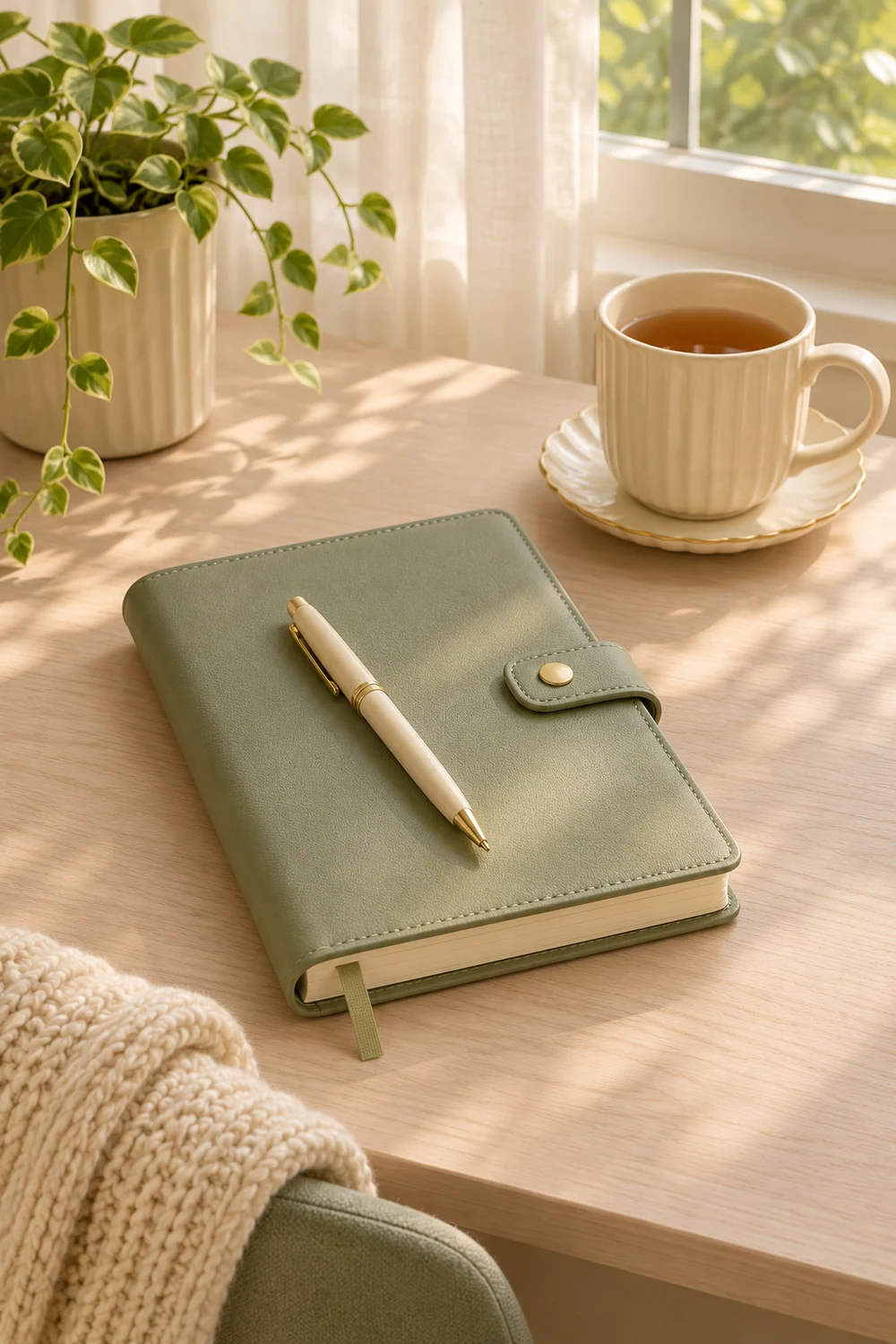
- A notebook, planner or app (paper works well for many people)
- One pen you like
- A calendar for fixed appointments
- Five quiet minutes at the same time every day
Do not buy a lot of extras. Start plain, and add things only if you miss them.
Step-by-Step Daily Page
Step 1: Write the Date and Your Top 3
At the top, write the date and then your three most important tasks. If you only finish those three, the day was a success. Keep the list short.
Step 2: Add Your Fixed Commitments
Write any meetings, appointments, school pickups or deadlines with times. These are the things that cannot move.
Step 3: Block Time for Your Top 3
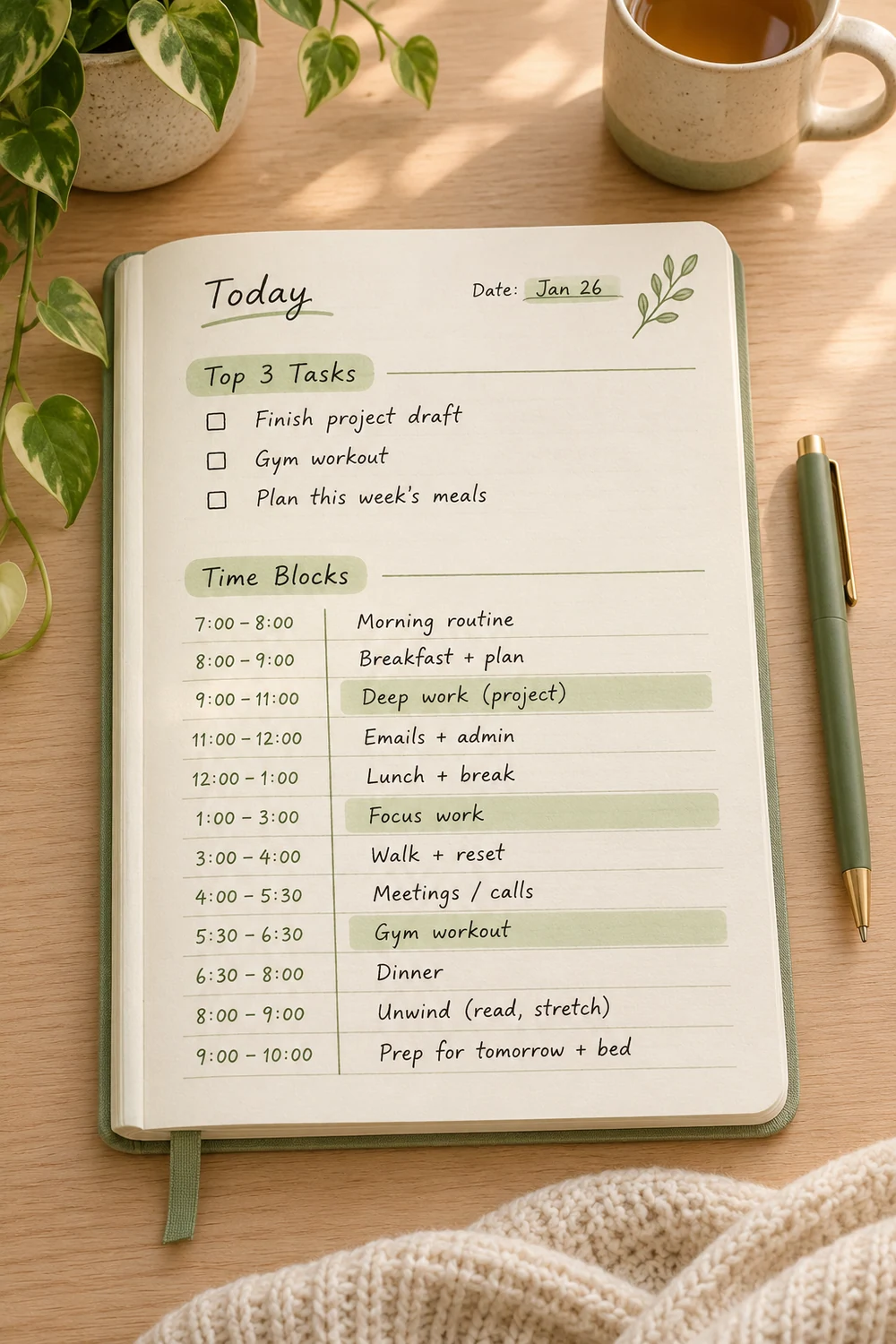
Look at the gaps and place your top three in realistic time slots. Add a bit of extra time between tasks. Things usually take longer than we expect.
Step 4: Add One Self-Care Item
Put one thing just for you on the page, such as a walk, a stretch, a call with a friend or a quiet cup of tea. Planning it makes it more likely to happen. Our healthy morning routine ideas include simple options.
Step 5: Leave Space for Notes
Keep a small area for ideas, reminders and a brain dump. This clears your mind and keeps the main page clean.
Step 6: End With a Quick Review
At the end of the day, tick off what you did and move unfinished tasks to tomorrow. Write one thing that went well.
A Sample Planner Day
- Top 3: 1) Send the project update 2) Book the dentist 3) 20-minute walk
- Schedule: 9:00 team call, 10:00 to 11:00 project update, 12:30 lunch and walk, 3:00 phone call, 5:30 dinner prep
- Self-care: Stretch before bed
- Notes: Buy printer paper, ask Sam about the weekend
- Wins: Finished the update early
Add a Weekly Layer
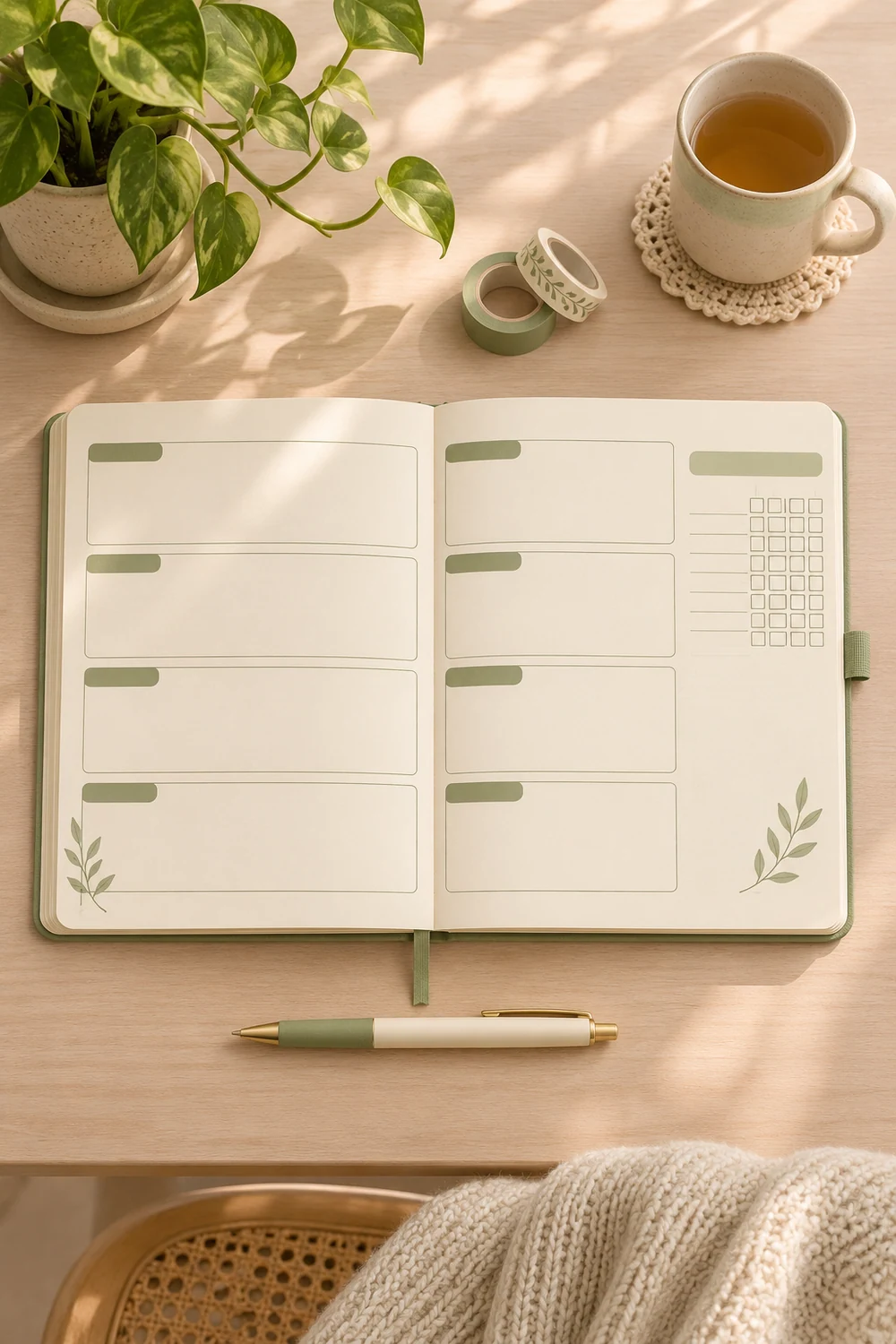
A weekly page helps you see the whole week.
- List your fixed events for the week.
- Choose three goals for the week.
- Decide which days are best for bigger tasks.
- Add routines such as workouts, meal prep and a rest evening.
Spend 15 minutes on Sunday doing this. Our weekly self-care routine for busy women includes a short weekly check-in you can combine with it.
Add a Habit Tracker
A small tracker on the side of your weekly page lets you tick off habits like water, movement and sleep. If you want layout ideas, see our 30-day habit tracker ideas and our guide to building good habits.
Planner Styles to Try
- Time-blocking: assign each task a time slot.
- To-do list with priorities: mark the top 3 with a star.
- Bullet journal style: simple dots and dashes for tasks, events and notes.
- Digital: a calendar app and a notes app for people who prefer screens.
Try one style for two weeks before you decide.
Tips to Make It Stick
- Plan at the same time every day. After your morning drink or just before bed works well.
- Keep your planner where you can see it. A hidden planner is a forgotten planner.
- Plan less than you think you can do. A realistic plan is satisfying.
- Forgive blank days. Start again the next day without catching up.
- Link it to a habit you already have. See daily habits of healthy women for sample routines to add.
Common Mistakes
- Overloading the day. More than five tasks is usually too many.
- No time for breaks. Include rest and meals.
- Making it too pretty. Aesthetic layouts can become a chore.
- Never reviewing. A quick weekly look keeps it useful.
- Using too many tools. One planner is enough.
Frequently Asked Questions
How do I start using a planner?
Start with a single daily page: top 3 tasks, fixed commitments and a notes area. Add more later.
Should I plan in the morning or at night?
Either works. Some people plan the night before so they start the day with a clear head, while others plan after breakfast.
Paper or digital planner?
Choose what you will use. Paper helps some people focus, while apps are great for reminders.
How many tasks should I put on a daily list?
Many people do well with three main tasks and a few small ones.
What if I miss a day?
Skip it and start again. There is no need to catch up on past pages.
How can a planner help my habits?
Seeing tasks and habits written down makes them feel more real. A tracker adds a bit of motivation.
Final Thoughts
A planner should help you, not stress you. Start with your top three and a short review each day. When that feels natural, add a weekly page and a habit tracker. Simple is the setup that lasts.
Related Articles You May Like
- Daily Habits of Healthy Women: What a Normal Day Looks Like
- Best Home Workout Equipment for Beginners
- Best Kettlebells for Women Beginners
This article is for general information and inspiration only and is not medical advice. If you have a health condition or concerns about exercise, sleep or nutrition, please speak with a qualified healthcare professional.
This article is for general information only and is not medical advice. Talk to a doctor before changing your diet, exercise or health routine. Read our full disclaimer.